
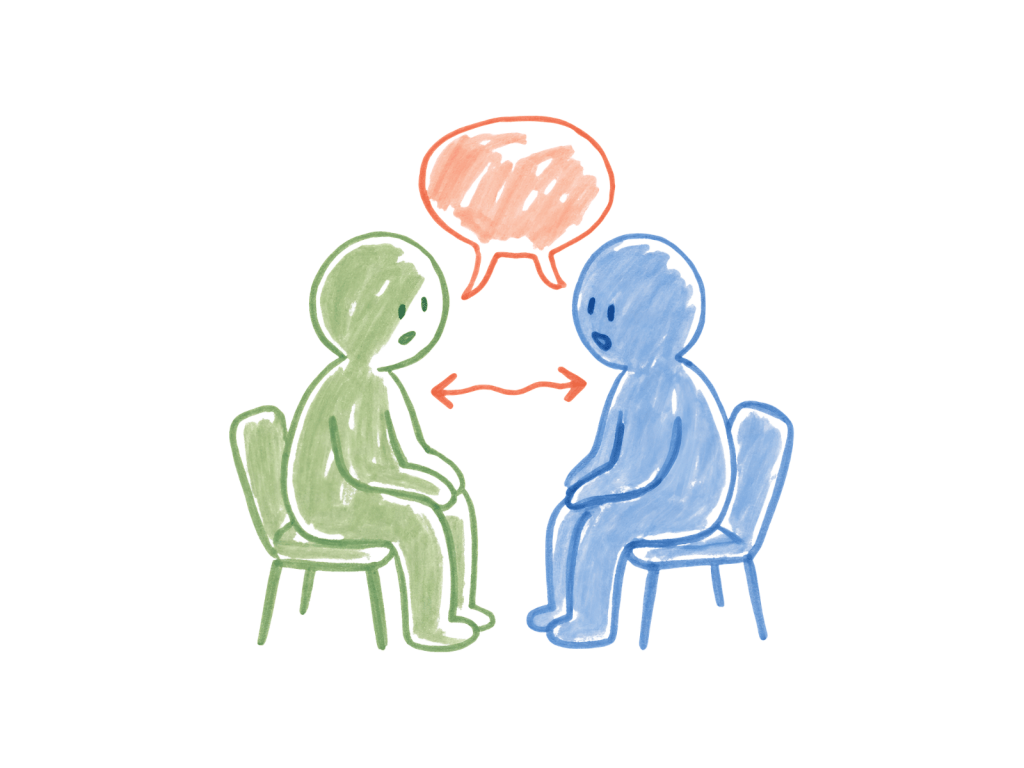
The real world starts beyond our living room.
We have ten thousand different groups. School groups. College groups. University groups. Work groups. Family groups. We rarely move outside these groups, because these define our comfort zone. They tell us we are most loved and accepted within these four walls of like-minded people, and most of us are not ready to talk to people outside these categories. Of course, these are matters of the heart, and one can’t force a relationship. However, have we somehow forgotten the joy of spontaneous conversation with people we share almost nothing with?
Building Walls Since Our Childhood Days
As children, we were repeatedly told to spend time with the ‘good’ students. The hallmarks of a good student were excellent marks in every subject, enthusiastic participation in sports and extracurricular activities, and charisma. They must also be polite and respectful, be admired by their classmates and become every parent’s dream child. We don’t want to blame our parents; they only want the best for us, but does every such child grow up to be the friend, romantic partner, colleague, and supervisor everyone wants, simply because they were a school topper?
As adults now grown up, we fear going beyond what we know. We don’t speak to the colleague who is a single parent, afraid of saying the wrong thing. We don’t want to be friends with people who belong to a language or community different from our own, which is a major reason behind racism and communalism. We have categorised professions as ‘good’ and ‘bad’, and whisper behind their backs about how much or how little money they make. Empathy is at an all-time low in our highly digitalised world, even though people are online almost all their waking time.
In the best conversations, you don’t even remember what you talked about, only how it felt. It felt like we were in some place your body can’t visit, some place with no ceiling and no walls and no floor and no instruments.
John Green, Turtles All the Way Down
What We Miss When We Don’t Watch, Listen And Speak
The writer describes herself as a social butterfly, though she has almost no friends. However, she enjoys talking to anyone if she’s not tired, angry or overthinking. She has spoken to elderly couples at railway stations, new colleagues who piqued her interest and new neighbours. Her gym trainer jokingly calls her acquaintances her ‘union’, because she speaks easily with people from all backgrounds. Once again, it is not talent. She is a magazine journalist, which requires her to speak to people she has never met, even if it is to procure press kits.
When we speak to people beyond our own, we learn so much about ourselves and the world. We learn about our education, career and family, and theirs. We are grateful for what we have and accept what we don’t, which is tough. We realise that despite our differences, we share the human emotions of joy, grief, anger, hope and despair. When we dismantle our personal bias, we learn resilience, wisdom, optimism and ambition from people who struggled and won. That won’t happen if we constantly judge how people live and how they choose to build themselves.
Always speak to the people the world avoids; most of the time, they are not criminals.
Aadrita Chatterji
We Have A Lot To Learn From Everyone Else!
As the writer has mentioned, the real world starts beyond our living room. But then, personal bias and judgement are ingrained in Indian society. People judge people by their community, address, dietary habits, family status, and lifestyle choices. Once, the writer was equally narrow-minded about women who lived differently from her fairly traditional middle-class upbringing. After all, that’s what we learnt as youngsters, right? Of course, we must always protect ourselves from mischief-makers. However, always speak to the people who chose a different life than you. There is a difference.
Always speak to the people the world avoids; most of the time, they are not criminals. They are simply people who made bad choices, in terrible circumstances or were treated horribly. If they choose the good path, support them. If they choose the wrong path, we must protect our mental health. It’s time to leave our comfort zone: a nearby café, a local hobby class, a concert or a festival. Observe people, choose a common topic and strike up a friendship. Maybe we’ll have a new friend, network with a potential employer, or find the love of our lives.
Moving away from the daily transactional interactions, we need to have more unscripted conversations with people around us. Let us ditch the self-centredness for a day to talk to the lonely-looking cashier, local vendors that we buy from every day, the newly married couple that moved in next door and the young teenager in love. We’ll find that each of them comes with their separate stories, perspectives and dreams. They don’t have to share our thoughts, but speaking to them as human beings may well become the highlight of our day.
All we have to do is open our minds and hearts.


Leave a Reply