
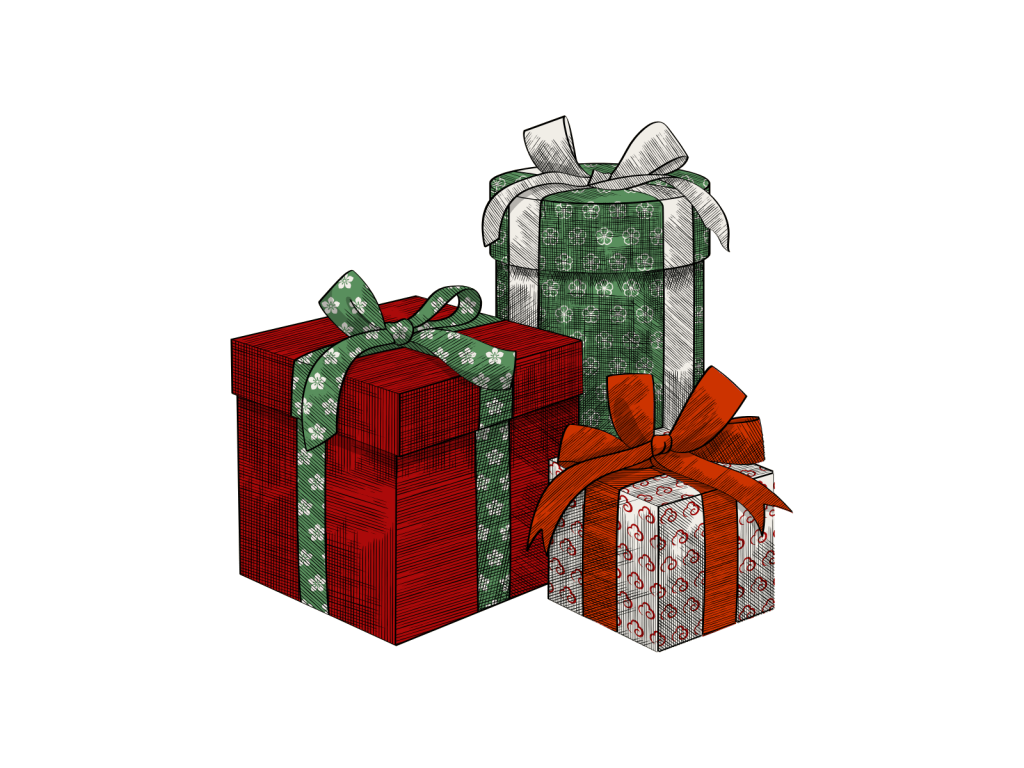
When the writer got married two years ago, she received almost thirty tableware sets. She’s happy to invite friends for tea, but, unfortunately, she is an average home cook and a terrible hostess.
As she watches the iron rack shelf creak under the ‘well-thought-out’ gifts, she asks herself: what will she do with all this in the future? In Indian society, whether it’s a child’s annaprasanna, the neighbour’s daughter’s birthday, or our third cousin’s wedding, gifting is equal to a mission. We can’t gift something too expensive; otherwise, it becomes an obligation for the other side. An inexpensive present makes us look cheap, only greedy enough to come and hog that last piece of cake. Back then, brand-new lunchboxes and water bottles were passed around. At this age, it’s crockery.
The Politics Of Gifting And Re-Gifting
In Indian society, gifts are rarely chosen at random. They determine our relationship with the recipient: how much we love and respect them, our socio-economic stability and underlying family politics. It becomes a transaction between families, telling us that the right kind of gift will prolong relationships, while the wrong kind becomes gossip. The gifting politics starts from the child’s birth, which warrants at least a pair of golden bangles for the wrists and ankles. It continues on birthdays, weddings, festivals and milestone anniversaries.
When it comes to re-gifting, it is common for people to maintain an internal spreadsheet in their brain. Where did this electric kettle come from? Was it from the next-door neighbour? Would they know if I gift it to their cousin the next month? Finally, will it come circling back to me on Diwali? The writer’s mother tells her that it was common for young mothers like her to exchange children’s gifts at birthday parties. Then comes the ominous question, “Are you using the thermos we gifted your daughter last year?” It was re-gifted to a third friend at her birthday party six months ago.
You can’t keep that gift in the cupboard and just bring it out when Aunt Jane is due to visit. Your subconscious mind still knows you have it on the premises… Remember, it’s the thought that counts. You can appreciate being given the gift without necessarily having to keep it.
Karen Kingston, [What to do with] Unwanted Gifts [1]
We Are Not Ready To Let Things Go
In the Bhagavad Gita, Chapter 2 (Verse 62-63), Lord Krishna states, “dhyāyato viṣhayān puṁsaḥ saṅgas teṣhūpajāyate, saṅgāt sañjāyate kāmaḥ kāmāt krodho ’bhijāyate”. He speaks of our moh-maya (मोह माया), our worldly attachment to what we own and whom we love. Though the verse speaks of attachment leading to uncontrolled desire, anger, destruction of intellect and spiritual ruin, we can use the philosophy to ask ourselves the ultimate question: why do we store unwanted gifts in our homes anyway? Answer: “Oh, but your aunt gifted that to me! How do I throw it away?”
Receiving gifts is never wrong, unless you receive a statuette that has been gift-wrapped multiple times. However, our home becomes an emergency when we buy what we like at the market and add to the chaos. The writer has seen several older women buying cookery, crockery, linen and furniture because they wanted to design their space by themselves – without getting rid of what is already there. Our homes become a patchwork of what has been bought, what has been gifted and what looks good enough to impress the guests.
Our homes become a patchwork of what has been bought, what has been gifted and what looks good enough to impress the guests.
Aadrita Chatterji
As We Go Cashless, Gift Cash Instead!
India has gone digital, but cash sometimes remains controversial to gift at festivals and ceremonies. The writer believes money is the most thoughtful present for a young child, a newlywed couple and a retired couple. Three reasons why: shagun is an auspicious concept in Hinduism; gifting cash means that the recipient is free to choose what to buy; and thirdly, it saves time and space, as it doesn’t sit on someone’s shelf ready to be re-wrapped and re-gifted. Perhaps, fourthly, it tells the homeowner that they need to declutter their home first.
When the writer got married, she wanted her parents to add the note to her wedding invitation card: ‘No Gifts Please. Cash Only.’ Unfortunately, they did not agree as it would look ‘rude and uncouth’. Consequently, she received fifty tableware sets, eleven electric kettles, saris she would never wear and some handbags she had to re-gift to people she didn’t know. She is still struggling with the rest, hoping that somebody in her neighbourhood gets married, has a child or moves away to a different city so she can declutter her home.
The main takeaway from this piece: let us replace the incessant pressure of gifting and re-gifting with good wishes, cash presents and no obligations. The next time we’re hosting an invitation, let us ditch the shame and specify that only cash presents are expected and appreciated. Donate the brand-new dinner sets, lunchboxes, water bottles, clothes and bed linen to the underprivileged instead. They will bless you for your kindness, and your homes will suddenly feel much lighter and emptier. Finally, if you want, feel free to buy things that you actually need.
Please don’t overcrowd your living spaces into a junkyard once again.


Leave a comment